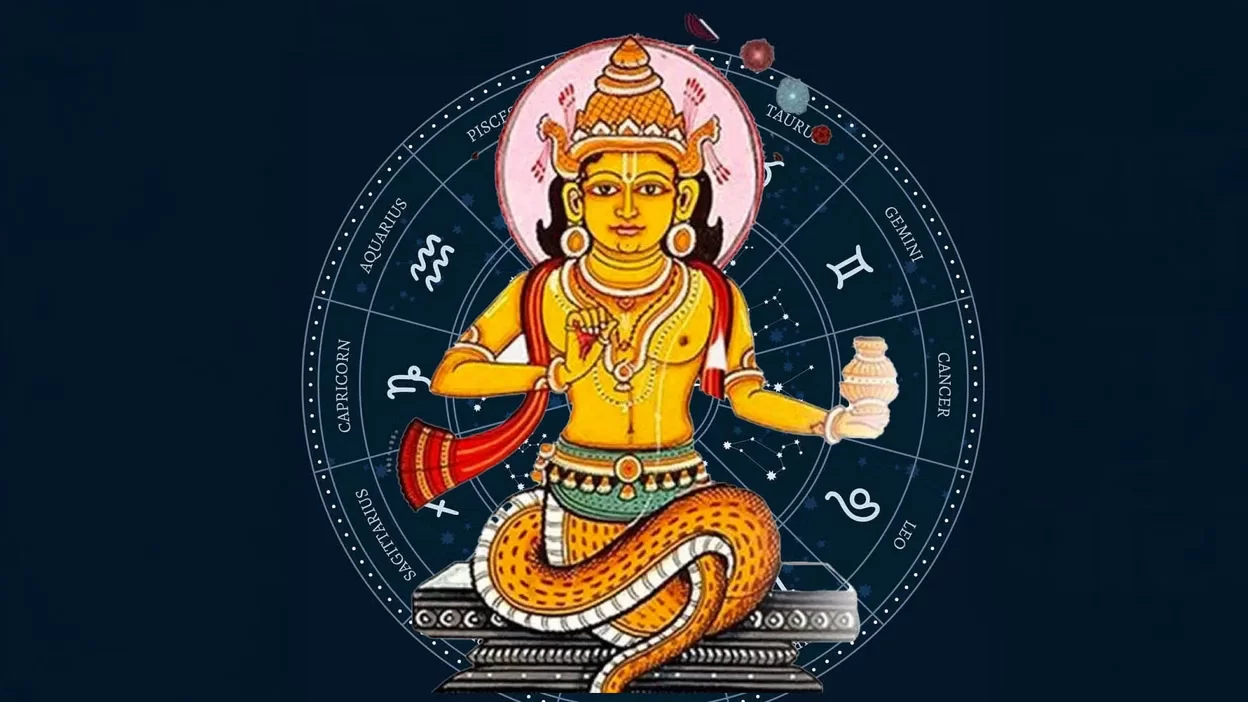
Rahu is one of the most mysterious and influential entities in Vedic astrology. Unlike the visible planets, Rahu is a shadow planet (North Lunar Node) that is believed to influence desires, ambitions, illusions, material success, sudden changes, and unconventional life experiences.
Many people consult astrologers after experiencing recurring obstacles in their careers, relationships, finances, or mental peace and are often told that they may have Rahu Dosh in their birth chart (Kundali). But what exactly is Rahu Dosh? How can you identify it? Does every Rahu placement indicate a dosh?
The answer is no.
A strong or prominent Rahu in a Kundali does not automatically create Rahu Dosh. In Vedic astrology, the overall strength of the horoscope, planetary aspects, house placements, conjunctions, Mahadasha, Antardasha, and divisional charts all play an important role in determining Rahu's influence.
In this guide, we'll explore eight commonly observed astrological signs that may indicate Rahu Dosh, along with important facts and common misconceptions.
What Is Rahu Dosh?
In Vedic astrology, Rahu Dosh generally refers to situations where Rahu is believed to create challenges due to its placement, conjunction with certain planets, or influence on important houses in the birth chart.
Different schools of astrology define Rahu Dosh differently. Some astrologers consider specific house placements significant, while others focus on Rahu's conjunctions, aspects, planetary periods, and the overall balance of the horoscope.
Because of these differences, Rahu Dosh should never be diagnosed solely based on one planetary position.
Why Is Rahu Important in Astrology?
Rahu is traditionally associated with:
-
Ambition
-
Material desires
-
Sudden opportunities
-
Illusion and confusion
-
Foreign travel
-
Technology and innovation
-
Politics and influence
-
Obsessions
-
Unexpected success
-
Unconventional thinking
Depending on its placement, Rahu can produce both positive and challenging experiences.
Many successful entrepreneurs, politicians, actors, researchers, and innovators are believed by astrologers to have a powerful Rahu in their birth charts.
8 Clear Signs That May Indicate Rahu Dosh
1. Rahu Occupies Sensitive Houses in the Kundali
One of the first things astrologers examine is Rahu's house placement.
Some traditions pay special attention when Rahu is placed in houses such as:
-
1st House (Self and Personality)
-
4th House (Home and Emotional Peace)
-
5th House (Education, Children, Creativity)
-
7th House (Marriage and Partnerships)
-
8th House (Transformation and Sudden Events)
-
9th House (Fortune and Higher Learning)
-
12th House (Expenses, Isolation, Foreign Lands)
However, house placement alone does not confirm Rahu Dosh. The condition of the house lord, planetary aspects, and conjunctions must also be evaluated.
2. Rahu Is Conjunct the Moon (Grahan Yoga)
When Rahu closely conjoins the Moon, many astrologers refer to this as Grahan Yoga (Eclipse Yoga).
Traditional interpretations associate this combination with:
-
Emotional ups and downs
-
Mental confusion
-
Anxiety
-
Difficulty making decisions
-
Strong imagination
-
Unusual thinking patterns
The actual effects depend on the Moon's strength, sign, house placement, and aspects from benefic planets.
3. Rahu Is Conjunct the Sun
A conjunction between Rahu and the Sun is another combination that receives considerable attention.
Traditional interpretations may include:
-
Challenges involving authority figures
-
Differences with father or mentors
-
Fluctuations in confidence
-
Desire for recognition
-
Sudden changes in career direction
Again, these outcomes depend on the overall chart rather than the conjunction alone.
4. Rahu Influences the Ascendant or Ascendant Lord
The Ascendant (Lagna) represents personality, health, physical appearance, and the way a person approaches life.
When Rahu strongly influences the Ascendant or its ruling planet, astrologers may observe traits such as:
-
Restlessness
-
Strong ambition
-
Attraction toward unconventional careers
-
Frequent life changes
-
Desire for fame or recognition
-
Unpredictable decision-making
In many charts, this influence can also contribute to remarkable success.
5. Recurring Sudden Ups and Downs
Rahu is associated with unexpected events.
During significant Rahu periods, some people report:
-
Unexpected career changes
-
Sudden financial gains or losses
-
Relocation
-
Foreign opportunities
-
Legal complications
-
Rapid lifestyle changes
Astrologers often examine whether these events coincide with Rahu Mahadasha, Antardasha, or major planetary transits.
6. Persistent Confusion Despite Good Opportunities
Traditional astrology sometimes associates Rahu with illusion (Maya).
People believed to be strongly influenced by Rahu may experience:
-
Difficulty choosing between opportunities
-
Constant dissatisfaction
-
Unrealistic expectations
-
Attraction toward shortcuts
-
Repeated changes in goals
-
Confusion despite external success
These interpretations are symbolic and should not be viewed as psychological diagnoses.
7. Strong Attraction Toward Unconventional Paths
Rahu is linked with breaking traditions.
Depending on its placement, individuals may feel drawn toward:
-
Foreign countries
-
Advanced technology
-
Digital businesses
-
Artificial intelligence
-
Politics
-
Research
-
Occult studies
-
Entrepreneurship
-
Non-traditional careers
This is not necessarily a negative influence. In many cases, it reflects innovation and adaptability.
8. Challenges Intensify During Rahu Mahadasha
In Vedic astrology, planetary periods (Dashas) are considered highly important.
If Rahu is challenging in the birth chart, astrologers may observe increased influence during:
-
Rahu Mahadasha
-
Rahu Antardasha
-
Major Rahu transits
Possible experiences may include:
-
Career uncertainty
-
Relationship changes
-
Financial fluctuations
-
New opportunities abroad
-
Spiritual transformation
-
Major life transitions
However, many people also experience tremendous professional growth during Rahu Mahadasha, especially when Rahu is well-placed.
Common Misconceptions About Rahu Dosh
Myth 1: Every Rahu Placement Is Bad
Reality: Every Kundali contains Rahu. Its placement may produce favorable, neutral, or challenging results depending on the overall horoscope.
Myth 2: Rahu Dosh Guarantees Failure
Reality: Numerous successful individuals are believed by astrologers to have strong Rahu influences.
Rahu is also associated with:
-
Innovation
-
Leadership
-
Technology
-
Foreign success
-
Mass popularity
-
Strategic thinking
Myth 3: Expensive Rituals Are Always Necessary
Reality: Spiritual practices and traditional remedies may be meaningful for those who follow Vedic traditions. However, people should avoid fear-based claims that promise guaranteed results or insist on costly rituals.
Myth 4: Online Kundali Software Can Fully Diagnose Rahu Dosh
Reality: Software can accurately calculate planetary positions, but interpreting Rahu Dosh requires analyzing:
-
House strength
-
Planetary aspects
-
Conjunctions
-
Sign placement
-
Mahadasha
-
Antardasha
-
Divisional charts
-
Overall horoscope balance
A complete interpretation goes beyond automated reports.
How Astrologers Evaluate Rahu
Professional astrologers generally consider several factors before drawing conclusions, including:
-
Rahu's zodiac sign
-
House placement
-
Conjunctions with other planets
-
Planetary aspects
-
Strength of the Ascendant
-
Condition of the Moon
-
Rahu Mahadasha and Antardasha
-
Navamsa (D9) chart
-
Overall planetary strength
A single factor rarely provides the complete picture.
Traditional Remedies for Rahu
People who follow Vedic traditions may choose practices such as:
-
Chanting Rahu mantras
-
Worshipping Lord Shiva or Goddess Durga
-
Offering prayers on Saturdays or during Rahu Kaal (according to tradition)
-
Charity and helping those in need
-
Meditation and mindfulness
-
Maintaining honesty and self-discipline
-
Feeding birds or donating food as part of charitable practices
These remedies are rooted in spiritual belief and cultural tradition. Their purpose is often to encourage self-reflection, devotion, and positive actions rather than guarantee specific outcomes.
What Does Science Say?
From a scientific perspective, there is no conclusive empirical evidence that the position of Rahu at the time of birth directly causes specific life events or personality traits.
Astronomy identifies Rahu as the North Lunar Node, an astronomical point where the Moon's orbit intersects the Sun's apparent path. Astrology, on the other hand, assigns symbolic meanings to this point based on traditional beliefs.
Whether one views Rahu Dosh as a spiritual concept, a symbolic framework, or a cultural tradition depends on individual beliefs.
Final Thoughts
Rahu Dosh is one of the most discussed topics in Vedic astrology, but it should never be judged based on a single placement or online report. Rahu can symbolize both challenges and opportunities, and its influence varies greatly from one Kundali to another.
If you suspect a strong Rahu influence in your birth chart, consider a complete horoscope analysis rather than focusing on one planetary combination. A balanced interpretation takes into account planetary strengths, Dashas, aspects, yogas, and the overall structure of the Kundali.
Above all, avoid making life decisions out of fear. Astrology is most valuable when it is used as a tool for self-awareness, reflection, and personal growth—not as a source of anxiety or certainty about the future.